
Book a no-obligation consultation to map your global pathway — medically coordinated & legally guided. Start here.
Understanding female fertility is the first step toward identifying potential challenges and exploring the right path forward.
At GP-Fertility, we provide comprehensive, personalized fertility evaluations designed to give you clear answers and guide your next steps with confidence.

Female fertility refers to a woman's ability to conceive and sustain a healthy pregnancy. This process involves a complex interaction between reproductive organs, hormones, and timing.
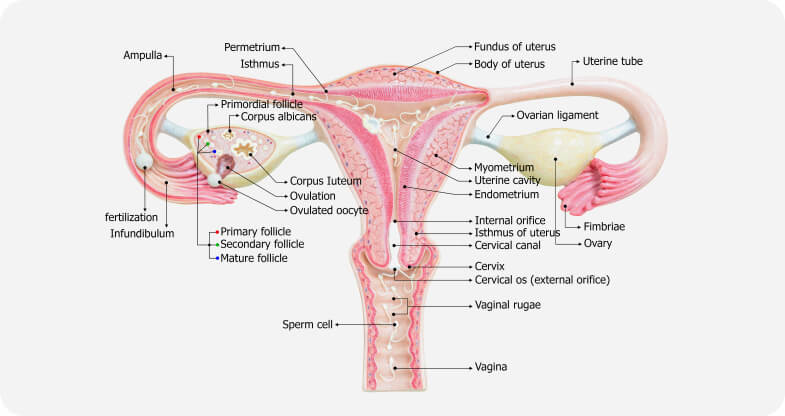
The female reproductive system includes the ovaries, fallopian tubes, uterus, cervix, and vagina. Each plays a critical role in conception.
During a typical menstrual cycle, one of the ovaries releases a mature egg (ovulation). If sperm is present at the right time, fertilization may occur in the fallopian tube. The resulting embryo then travels to the uterus, where it must successfully implant in the uterine lining to establish a pregnancy.
This process is regulated by key reproductive hormones, including:
Even small disruptions in this system can affect fertility, which is why a comprehensive evaluation is essential.
Female fertility can be influenced by a wide range of medical, genetic, and lifestyle factors.
Age is one of the most important factors affecting fertility. Women are born with a finite number of eggs, and both egg quantity and quality decline over time.
Fertility typically begins to decline gradually after age 30 and more significantly after age 35.
Common signs include irregular menstrual cycles, pain during intercourse, and symptoms of hormonal imbalance.
A female fertility evaluation is designed to provide a comprehensive understanding of reproductive health. The specific tests recommended will depend on your individual medical history and symptoms.
Hormone levels provide important insights into ovarian function and ovulation. These are typically assessed through blood tests.
Common hormone evaluations include:
Connect with a GP-Fertility clinic today.
If you have been trying to conceive without success, or if you have known risk factors, a fertility evaluation can provide valuable insights and guide your next steps.
Early evaluation often leads to more options and better outcomes.
Understanding your fertility is the foundation of making informed decisions about your future.
At GP-Fertility, our global network of specialists provides personalized, evidence-based care tailored to your unique situation.
Book a consultation today and take the first step toward clarity and confidence.